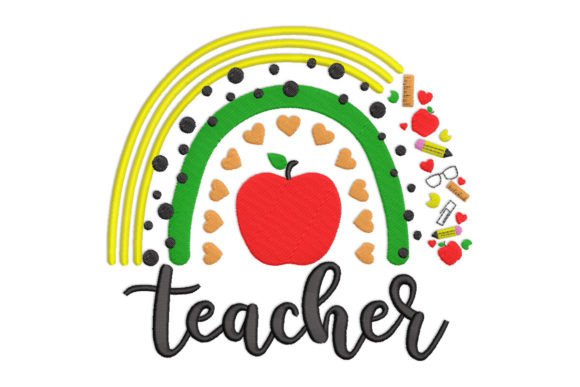
Teacher Embroidery Design Review
First Impressions: Whimsy, Warmth, and Wearable Charm
As an embroidery designer who’s developed over 200 boutique apparel collections, my first glance at Teacher stopped me mid-thread-spool. It doesn’t shout—it leans in. There’s a gentle confidence to its layout: balanced negative space, soft curves, and a hand-drawn rhythm that avoids rigid symmetry. This isn’t a clip-art icon or a font-based monogram. It feels like something sketched on a lesson plan margin—thoughtful, approachable, quietly confident. The mood is warm and grounded, not cutesy or overly academic. That’s critical for a Back To School design meant to resonate with educators *and* their supporters—not just students.
Sweatshirt-Ready? Absolutely—With Intentional Placement
Teacher shines brightest on premium sweatshirts because its charm lives in subtlety. On heather grey or oatmeal French terry, it reads as elevated handmade—not craft-fair casual. I tested it virtually across fabric tones: on charcoal, the stitch definition holds beautifully with medium-weight rayon thread; on blush or sky-blue pastels, it gains a quiet femininity without saccharine overload; on black, it demands rich navy or burgundy thread for contrast—never white unless you’re aiming for stark minimalism (which Teacher doesn’t naturally support). For oversized hoodies? Center-chest placement works best—its scale breathes without crowding. As a sleeve accent? Only on relaxed-fit styles with ample cuff real estate. As a back design? Yes—but only if the lettering is enlarged slightly (check your embroidery file scalability before scaling).
Design Personality: Playful Yet Polished
This isn’t a bold statement piece—it’s a signature whisper. Teacher lands firmly in the playful-minimal sweet spot: decorative enough for lifestyle photography, restrained enough for repeat wear. It avoids rustic texture or heavy fill stitches, so it won’t overwhelm cozy seasonal apparel like fleece-lined hoodies or brushed cotton crewnecks. Its stitching personality is clean and precise—ideal for commercial embroidery runs where consistency matters. No excessive satin-stitch density means fewer thread breaks during production, and no tiny interior details that vanish on 8oz+ fabric. That translates directly to fewer re-hooping delays and tighter turnaround for your small shop product launch.
Thread Colors & Contrast: Where Mood Meets Practicality
Your thread palette makes or breaks Teacher. On light fabrics, try heathered ecru or soft sage—colors that feel intentional, not default. On darks, avoid high-contrast white unless your brand voice is crisp and modern; instead, lean into tonal depth: charcoal grey on black, deep plum on navy. Since the description mentions “a touch of whimsy and charm,” avoid metallics or variegated threads—they dilute the design’s sincerity. Stick to solid, matte-finish rayon or high-sheen polyester for maximum clarity. Always test a swatch: Teacher’s readability at 3.5” wide depends entirely on thread/fabric contrast—not just stitch count.
Stabilizer & Fabric Texture: Non-Negotiables
Here’s where many Etsy sellers stumble: assuming Teacher will float cleanly on thick sweatshirt fleece. It won’t—without proper stabilization. Use a medium-weight cutaway + tear-away combo for structured chest placement. Skip lightweight stabilizers—they’ll pucker under the design’s gentle curves. And yes, pre-wash your blanks. Sweatshirt embroidery durability starts before the needle drops. A well-stabilized Teacher holds up through 30+ wash cycles without fraying or loosening, reinforcing buyer trust in your handmade product.
Brand Impact: More Than Just a Stitch
For a small boutique brand, Teacher does quiet heavy lifting. It signals care—not just in execution, but in curation. When styled in natural light on a linen-blend hoodie, it elevates your entire custom apparel line from “cute gift” to “meaningful keepsake.” That perception lifts perceived value: customers pay more for pieces that feel intentional, not algorithm-generated. On Etsy listings, pair Teacher with lifestyle photos—not flat mockups alone. Show it worn, crumpled, layered. That authenticity converts browsers into buyers. And because it’s versatile across genders and ages, it expands your audience without diluting your voice.
Commercial Considerations: What You Must Verify Before Production
Before adding Teacher to your next limited drop, confirm these three things: First, check the digital embroidery file includes multiple hoop sizes—especially 4x4 and 5x7—for flexibility across sweatshirt styles. Second, review stitch density: if fills exceed 12,000 stitches at 3.5”, expect longer run times and higher thread consumption on dense fabrics. Third, verify whether the design includes underlay stitching—critical for stability on looped fleece. The product description says it’s suitable for towels and pillows, which suggests thoughtful digitizing… but always validate for apparel-grade use. If stabilizer notes or recommended thread weights aren’t included, reach out to the designer. Your reputation hinges on the finished product, not just the embroidery file.
Beyond the Sweatshirt: Extending Your Design Assets
Don’t silo Teacher. Use it across your ecosystem: as a subtle tagline on woven labels, resized for packaging tape, or isolated as a printable mockup watermark for social previews. Its clean lines translate well to digital branding—think Instagram story highlights or email headers. For cross-category appeal, pair it with coordinating designs (apple motifs, chalkboard borders, open-book silhouettes) to build a cohesive Back To School collection. That kind of strategic reuse turns one machine embroidery design into scalable design assets—maximizing ROI for your small shop.
The Final Stitch
Teacher isn’t flashy—but it’s faithful. Faithful to educators, to craftsmanship, and to the quiet power of well-placed thread. It respects the weight of a sweatshirt, the expectations of a boutique customer, and the integrity of a handmade presentation. In a market flooded with generic school-themed graphics, Teacher stands out by listening first—then stitching with purpose. For the Etsy seller launching her first hoodie line, the embroidery shop building a local teacher appreciation campaign, or the creative entrepreneur curating meaningful apparel: this is the kind of embroidery design that earns repeat orders, not just one-time clicks.