Tenderloin Script Embroidery Font
First Impressions: Grace, Flow, and Quiet Confidence
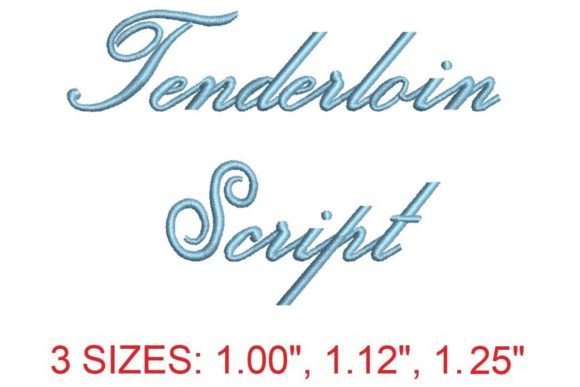
As an embroidery designer who’s tested hundreds of script fonts for personalized gift products, Tenderloin Script Embroidery Font immediately stands out—not with flash, but with intention. It’s not overly ornate, nor is it minimalist to the point of sterility. Instead, it strikes a rare balance: soft curves with subtle weight variation, generous spacing that breathes on fabric, and a gentle rhythm that feels handwritten—yet polished enough for heirloom-quality stitching. The mood? Timeless elegance with warmth. Think “grandmother’s recipe card meets modern wedding stationery.” It leans romantic and classic, not seasonal or trendy—making it ideal for baby embroidery, wedding gifts, and family keepsakes that are meant to be cherished across decades.
Where Tenderloin Script Shines in Real Gift-Making
This font isn’t just pretty—it’s purpose-built for emotional resonance. When stitched onto a 100% cotton baby blanket, Tenderloin Script carries tenderness without saccharine sweetness. On a linen pillow cover for a newlywed couple, its fluidity mirrors the intimacy of a handwritten vow. As a monogram on a custom tote bag for a teacher (yes—even Back To School fits beautifully), it adds quiet distinction amid playful, busy designs.
For Etsy sellers and small shop owners, Tenderloin Script Embroidery Font elevates perceived value instantly. A plain kitchen towel becomes a curated gift when embroidered with a name or date in this font. Nursery decor gains sophistication; aprons feel like heirlooms rather than accessories. Even digital embroidery file previews benefit—the graceful letterforms translate well into printable mockups, helping customers visualize the finished product before ordering.
Wedding gift designers will appreciate how effortlessly Tenderloin Script pairs with floral motifs or delicate borders. Baby product creators find it equally at home on onesies (with careful placement), swaddle blankets, and milestone cards. And because it avoids extreme thinness or tight loops, it maintains legibility at medium sizes—critical when stitching for craft fairs or holiday markets where shoppers glance quickly but remember feeling.
Use With Care: Knowing Its Boundaries
Tenderloin Script Embroidery Font thrives on stable, smooth fabrics—but it’s not universally forgiving. On highly textured fabric like terry cloth towels or thick woven blankets, fine interior curves may blur unless stitch density is adjusted thoughtfully. Similarly, stretchy baby clothes demand extra stabilizer support and possibly reduced fill density to prevent puckering around delicate joins.
Avoid using it for lettering smaller than 1.5 inches tall—especially in all-caps or dense names—since subtle entry/exit flourishes can merge or lose definition. Curved surfaces (like curved tote handles or rounded pillow edges) require repositioning or digitized curve compensation—something your embroidery software should handle, but always verify in test runs.
On dark fabric, contrast becomes crucial. Light thread colors (ivory, pale gold, heather gray) work exquisitely—but only if the underlying stabilizer fully supports coverage. And while Tenderloin Script holds up well after washing, avoid high-heat drying on delicate items like embroidered blankets or pillow covers to preserve thread luster and shape.
Why This Font Builds Trust—and Sales
Customers don’t buy fonts. They buy meaning, care, and craftsmanship. Tenderloin Script Embroidery Font signals attention to detail before the first stitch. Its consistent baseline, balanced kerning, and natural flow tell buyers: *This wasn’t slapped on—it was chosen.* That subliminal message builds trust, especially for handmade product buyers who equate thoughtful typography with intentional making.
For digital embroidery file sellers, including Tenderloin Script in your collection positions you as curator—not just vendor. For gift shop owners, pairing it with neutral-toned linens or organic cottons creates cohesive, photogenic displays. In product photography, its elegance enhances lighting and composition, increasing buyer engagement and time-on-page—key SEO and conversion wins for Etsy sellers and small business websites.
Practical Notes Before You Stitch
Before committing to customer orders, run these checks:
- Test on scrap fabric that matches your intended product—same weave, weight, and stretch.
- Confirm hoop size compatibility; some versions of Tenderloin Script may span larger hoops, especially in longer names or phrases.
- Review stitch density—if your machine struggles with dense fills, simplify background elements or reduce underlay.
- Use appropriate stabilizer: cutaway for knits, tear-away for stable wovens, and optional topping for napped fabrics.
- Compare light and dark fabric mockups side-by-side to assess thread color contrast and clarity.
- Check small details post-stitch: loop closures, serif connections, and terminal flicks should remain distinct—not fused or frayed.
- Verify commercial licensing before selling finished products. If your version of Tenderloin Script Embroidery Font includes commercial use rights, keep documentation handy for platform compliance (Etsy, Shopify, etc.).
Final Thought: More Than a Font—A Signature Touch
Tenderloin Script Embroidery Font doesn’t shout. It invites. It slows the eye, warms the hand, and deepens the connection between giver and receiver. Whether you’re stitching a baby’s first name onto a muslin blanket, personalizing a wedding guest book cover, or designing a limited-run collection for your small shop, this font quietly affirms quality, care, and continuity. It belongs in the toolkit of every embroidery maker who believes personalized gifts should carry both beauty and meaning—stitched, not stamped.