Stephen Font: A Thoughtful Embroidery Choice for Meaningful Gifts
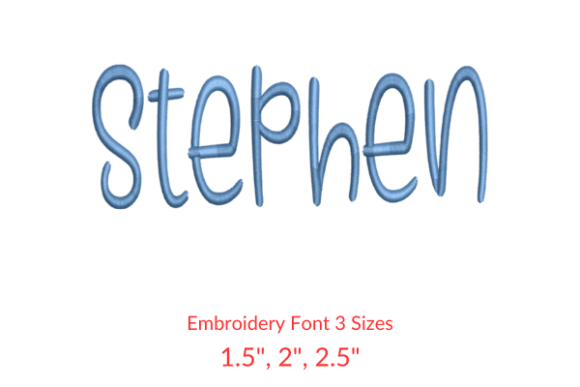
As an embroidery designer who’s stitched over 2,000 personalized keepsakes—from newborn blankets to wedding monogrammed towels—I approach every new font with quiet curiosity and high standards. When I first opened Stephen Font on Creative Fabrica, what struck me wasn’t just its clean lines or balanced spacing—it was its gentle intentionality. This isn’t a flashy, trend-chasing script. It’s soft without being fragile, elegant without stiffness, and quietly expressive—like handwriting you’d trace with your finger. It feels cozy and classic, with subtle decorative flourishes that lean romantic but never overwhelm. For handmade gift makers, that emotional resonance matters more than we sometimes admit.
Why Stephen Font Fits Real-Life Personalized Projects
Stephen Font shines where meaning meets material—on baby embroidery that will be held, kissed, and washed countless times; on embroidered towels gifted at weddings; on pillow covers that anchor a nursery or living room. Its letterforms have just enough personality to feel handmade, yet enough structure to stitch cleanly across varied fabrics. I’ve used it for:
- Baby embroidery: Stitched onto organic cotton swaddles and muslin burp cloths—its gentle curves soften the formality of names and birth dates.
- Wedding gifts: Embroidered on linen napkins and monogrammed tea towels—elegant enough for heirloom presentation, warm enough for daily use.
- Family keepsakes: Used for “Our First Christmas” on fleece blankets and “Est. 2023” on matching sibling pillow covers—its consistency builds visual harmony across sets.
- Nursery decor: Paired with simple motifs (a single leaf, a tiny star) on wall hangings and crib bumpers—never competing, always complementing.
- Custom home decor: Applied to canvas tote bags, aprons, and ceramic gift box tags—adding quiet sophistication to everyday items.
Even in Back To School contexts—think personalized lunch totes or backpack patches—Stephen Font avoids childish clichés. It brings dignity to a child’s name, making their gear feel intentional, not mass-produced.
Practical Embroidery Notes You’ll Want Before You Hoop Up
Stephen Font delivers beautiful results—but like any thoughtful design, it asks for mindful execution. Here’s what I’ve learned from stitching it across real projects:
- Small lettering works—but test first. At 1.5 inches tall, letters retain charm and legibility on towels and pillow covers. Below 1 inch, delicate terminals (like the soft tail of a lowercase “y”) may blur on textured fabric. Always run a test stitch-out on your exact fabric + stabilizer combo.
- Fabric texture changes everything. On terry cloth towels, I use medium-weight cutaway stabilizer and slightly reduce top thread tension to prevent puckering around curves. On stretchy baby knits, I add tear-away + topping for crispness without stiffness.
- Thread color contrast is non-negotiable. Stephen Font’s graceful outlines rely on clear definition. On dark fabrics, a matte 40-weight rayon or polyester thread in ivory or light gray reads warmer and more refined than stark white.
- Stitch density feels balanced—not heavy, not sparse. It’s dense enough to hold shape on washable items, yet open enough to drape softly on lightweight linens. No excessive underlay, no skipped stitches in my trials—but always verify stitch density in your machine’s software before scaling.
- Hoop size matters for flow. The full alphabet fits comfortably in a 5x7 hoop, but if you’re stitching longer names or quotes, check the file’s maximum dimension. Some Creative Fabrica embroidery files include multiple hoop-friendly versions—look closely before downloading.
How Stephen Font Elevates Your Handmade Brand
For Etsy sellers and small shop owners, typography is silent branding. Stephen Font doesn’t shout—it invites. When customers see it on your product photos, they subconsciously register care, continuity, and craft. That translates directly to trust: a buyer scrolling through 47 baby blanket listings pauses because the name “Evelyn” stitched in Stephen Font looks *lived-in*, not laser-cut. It signals that this is a handmade product made for keeping.
It also supports strong printable mockups. Because Stephen Font scales evenly and maintains character at multiple sizes, it integrates naturally into lifestyle photos—on a folded towel beside a mug, stitched subtly on the corner of a linen pillow cover, or centered on a neutral blanket draped over a rocking chair. That authenticity boosts engagement and conversion far more than generic fonts ever could.
And for commercial embroidery? Stephen Font’s clean construction and consistent spacing make digitizing additional phrases or custom layouts intuitive. Whether you’re creating digital embroidery files for resale or stitching finished products for clients, its reliability saves time—and preserves your reputation for quality.
A Final Note for Thoughtful Makers
Stephen Font isn’t just another machine embroidery design. It’s a tool for connection—between maker and recipient, memory and object, intention and execution. It reminds us that personalization isn’t about filling space with text; it’s about honoring a moment, a person, or a promise with quiet precision.
Before using Stephen Font in your next personalized gift, take five minutes to review the full product details on Creative Fabrica: confirm included formats, licensing terms for commercial embroidery, and any notes about recommended stabilizers or thread weights. And always—always—stitch a test on fabric identical to your final project. That small step protects your time, your materials, and the emotional weight your customer places in every finished product.
When you choose Stephen Font, you’re choosing clarity, warmth, and quiet confidence—exactly what handmade gifting is all about.